Facebook
 X
X
 Pinterest
 Copy Link
Step 18: The Final Steps Before Closing (Post 23/28)

| As your closing date approaches, the final details come together quickly. This phase is all about coordination, communication, and making sure everything is in place for a smooth transition.
Here’s what to expect:
With our guidance, these final steps are handled with care and precision—so you can close with confidence and peace of mind. 👉 Download your complimentary copy of the Selling Your Home with Confidence and Peace of Mind workbook here: https://forevermorehomes.com/resources Next up: Meet the professionals who work behind the scenes to make your home sale smooth, successful, and stress-free. The Forevermore Homes Team of Coldwell Banker is here to support seniors and their families through every detail of the home-selling journey. |
Step 17: Getting Through the Mortgage Contingency (Post 22/28 in the Series)

A mortgage contingency is a key clause in your real estate contract. It means the buyer must secure financing within a set timeframe for the sale to proceed. If they’re unable to obtain a loan, they can cancel the contract—usually without losing their deposit.
This clause protects both parties. It ensures the buyer is actively working to secure financing and helps avoid last-minute surprises that could derail the transaction.
When a buyer submits an offer, they include a pre-approval letter. But not all pre-approvals are created equal. That’s why our team goes beyond the paperwork—we contact the lender directly to verify the strength of the buyer’s financing.
We ask:
- What documents were reviewed?
- Has credit been pulled?
- Are income and assets verified?
- Are there any red flags?
This due diligence helps protect your sale and ensures the buyer is truly ready to move forward. It’s one more way we help you sell your home with confidence and peace of mind.
👉 Download your complimentary copy of the Selling Your Home with Confidence and Peace of Mind workbook here: https://forevermorehomes.com/resources
Next up: As closing day approaches, we’ll guide you through the final steps—from utility transfers to key handoff—so you’re fully prepared for a smooth and stress-free finish.
The Forevermore Homes Team of Coldwell Banker is committed to guiding seniors and their families through every step of the sale with clarity, care, and expert advocacy.
Step 16: Understanding the Appraisal Process (Post 21/28 in the Series)

If your buyer is financing their purchase, the lender will require an appraisal to confirm that your home’s value supports the loan amount. This step typically follows inspections and is essential to moving the transaction forward.
A licensed appraiser will visit your home to assess its market value—not its condition. They’ll take photos, measure square footage, evaluate upgrades, and compare your home to similar recently sold properties in the area.
While we don’t influence the final valuation, we advocate for your home by providing accurate comps, highlighting improvements, and sharing neighborhood insights. This helps ensure the appraiser sees the full picture.
If the appraisal comes in lower than the contract price, it creates an “appraisal gap.” The buyer may cover the difference, renegotiate, or cancel the contract if protected by a contingency. We prepare for this possibility upfront by negotiating appraisal gap coverage when appropriate.
Our proactive approach helps protect your sale price and keeps the transaction on track—so you can move forward with confidence and peace of mind.
👉 Download your complimentary copy of the Selling Your Home with Confidence and Peace of Mind workbook here: https://forevermorehomes.com/resources
Next up: We’ll explain the mortgage contingency and how we monitor the progress of your buyer’s loan approval.
The Forevermore Homes Team of Coldwell Banker is committed to guiding seniors and their families through every step of the sale with clarity, care, and expert advocacy
Step 15: Managing Inspections with Clarity and Confidence (Post 20/28 in the Series)

| Once your home is under contract, the buyer will likely schedule one or more inspections to assess its condition. These inspections help buyers feel confident in their purchase—and they can influence the next steps in the transaction.
While some buyers waive inspections to strengthen their offer, most still opt for them, especially if required by their lender. Common inspections include home, radon, pest, mold, septic, well water, and chimney evaluations. On inspection day, expect the buyer’s inspector (often accompanied by the buyer and their agent) to spend 2–4 hours reviewing your home. You’ll be asked to leave during this time, and it’s important to secure pets and valuables. It’s helpful to understand what inspectors do—and don’t do. They provide a visual, non-invasive evaluation of your home’s major systems and components. They won’t open walls, move furniture, or guarantee future performance. Their findings may lead to further evaluations by specialists. After the inspection, the buyer must notify you of their decision by the contingency deadline. They may request repairs, credits, or proceed without changes. In rare cases, serious issues may lead to renegotiation or withdrawal. Our team monitors every step, helping you respond strategically and keeping the transaction on track—so you can move forward with peace of mind. 👉 Download your complimentary copy of the Selling Your Home with Confidence and Peace of Mind workbook here: https://forevermorehomes.com/resources Next up: Learn how the appraisal process works and how we advocate for your home’s value every step of the way. The Forevermore Homes Team of Coldwell Banker is here to guide seniors and their families through every detail of the home-selling process with care, clarity, and confidence. |
Step 14: Contract Date – Moving Forward with Confidence (Post 19/28 in the Series)

Congratulations—your home is officially under contract! This is a major milestone in your journey, and it marks the beginning of the final phase of your sale. At this stage, our team shifts into high gear to ensure everything proceeds smoothly and efficiently.
We immediately send the signed contract to your real estate closing attorney, so they can begin preparing the legal and financial documents. We also share contact details for the buyer’s attorney and lender to streamline communication.
Behind the scenes, we’re actively coordinating with the buyer’s agent to ensure inspections are scheduled within the agreed-upon timeframe. We monitor deadlines, facilitate document exchanges, and address any issues quickly and professionally.
Our goal is to keep the process moving forward with minimal stress—so you can focus on your next chapter with peace of mind.
👉 Download your complimentary copy of the Selling Your Home with Confidence and Peace of Mind workbook here: https://forevermorehomes.com/resources
Next up: We’ll walk you through what to expect during the inspection process—and how to stay calm, informed, and prepared.
The Forevermore Homes Team of Coldwell Banker is here to guide you every step of the way, with warmth, expertise, and a deep understanding of the unique needs of seniors and their families.
Step 13: Reviewing Offers – A Clear, Side-by-Side Comparison (Post 18/28 in the Series)
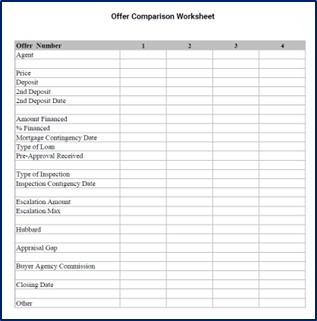
When offers begin to come in, it’s exciting—but it can also be overwhelming. That’s why we prepare a comprehensive summary spreadsheet that allows you to compare each offer side by side, with clarity and confidence.
This spreadsheet includes key terms that go far beyond just the price. We help you understand what each item means and why it matters:
- Price: The total offer amount—important, but not the only factor.
- Deposit & Second Deposit: Indicators of buyer commitment.
- Financing Details: Amount and percentage financed, type of loan, and pre-approval status.
- Contingencies: Inspection, mortgage, and appraisal timelines that affect risk and flexibility.
- Escalation Clauses: If included, these show how much a buyer is willing to increase their offer.
- Hubbard Clause: Indicates if the buyer must sell another home first—adding potential delays.
- Appraisal Gap Coverage: Protects your sale price if the appraisal comes in low.
- Buyer Agency Commission Requests: Ensures your net proceeds are protected.
- Closing Date: Compared to your preferred timeline for a smooth transition.
By reviewing all these elements side by side, we help you make an informed decision—not just based on price, but on strength, reliability, and alignment with your goals.
In our next post, we’ll explore Step 14: Contract Date – Moving Forward with Confidence, and what happens once you accept an offer and begin the path to closing.
👉 Download your complimentary copy of the Selling Your Home with Confidence and Peace of Mind workbook here: https://forevermorehomes.com/resources
The Forevermore Homes Team of Coldwell Banker is here to guide you with care, clarity, and a commitment to your goals—because selling your home should feel empowering, not overwhelming.
Step 12: Going Active on the MLS – Launching Your Home to the Market (Post 17/28 in the Series)

With your home fully prepared and professionally marketed, it’s time for the official launch.
Going Active on the MLS (Multiple Listing Service)This is the moment your home becomes visible to:
Once Active, showings begin, interest builds, and offers start to come in. Our team actively manages inquiries, appointments, and feedback to keep momentum strong. The Power of “Coming Soon”Before going Active, we may choose to list your home as Coming Soon—a strategic marketing period that builds anticipation and allows agents to schedule showings in advance. During this phase:
This approach is especially effective for homes that are newly staged, freshly improved, or located in high-demand areas. It helps create urgency and excitement, ensuring a strong launch. Whether we go straight to Active or use a Coming Soon strategy, our goal is the same: to launch your home with confidence, clarity, and competitive positioning—so you attract strong interest and receive the best possible offers. In our next post, we’ll explore Step 13: Reviewing Offers – A Clear, Side-by-Side Comparison, and how we help you evaluate each offer with clarity and confidence. 👉 Download your complimentary copy of the Selling Your Home with Confidence and Peace of Mind workbook here: https://forevermorehomes.com/resources Next up: Reviewing offers—how we help you compare and choose the best one. The Forevermore Homes Team of Coldwell Banker is here to guide you with care, clarity, and a commitment to your goals—because selling your home should feel empowering, not overwhelming. |
Step 11: Creating Marketing Assets – Strategic Exposure That Drives Results (Post 16/28 in the Series)

With your home beautifully prepared and professionally photographed, the final step before going live is creating a suite of marketing assets designed to showcase your property to the widest and most qualified audience possible.
Powered by Coldwell Banker Listing ConciergeThrough Coldwell Banker’s Listing Concierge program, we offer a premium marketing package that includes:
These assets are created by a team of marketing professionals who understand how to position your home for maximum impact. The result is a polished, cohesive campaign that elevates your listing above the competition. Traditional Meets DigitalWe blend traditional methods like print brochures and direct mail with a robust digital strategy. Today’s buyers begin their search online, and your home needs to stand out in that space. Digital marketing allows us to:
Why Marketing Matters—Even in a Seller’s MarketEven when inventory is low and demand is high, strategic marketing drives competition, attracts multiple offers, and helps you achieve the best possible price and terms. Marketing isn’t just about visibility—it’s about positioning your home as a must-see property. With our team and Coldwell Banker’s resources behind you, your home will be presented with the professionalism and polish it deserves. In our next post, we’ll explore Step 12: Going Active on the MLS – Launching Your Home to the Market, and how we time your listing for maximum impact. 👉 Download your complimentary copy of the Selling Your Home with Confidence and Peace of Mind workbook here: https://forevermorehomes.com/resources The Forevermore Homes Team of Coldwell Banker is here to guide you with care, clarity, and a commitment to your goals—because selling your home should feel empowering, not overwhelming. |
Step 10: Professional Photography – Capturing Your Home at Its Very Best (Post 15/28 in the Series)

| Once your home is fully prepared—cleaned, staged, and polished—it’s time to showcase it to the world. That begins with professional photography, and we don’t settle for average.
At the Forevermore Homes Team of Coldwell Banker, we work with top-tier photographers who specialize in real estate and know how to capture your home in its best light. What Professional Photographers DoOur photographers go far beyond snapping pictures. They use:
They know how to make rooms feel bright, open, and inviting—qualities buyers look for when browsing online listings. Why It’s So ImportantIn today’s market, your first showing happens online. Buyers scroll through dozens of listings, and your photos are what make them stop and take notice. Beautiful, professional images:
Homes with high-quality photography consistently sell faster and for more money than those with amateur or poorly lit images. Reflecting Your EffortYou’ve invested time and care into preparing your home. Professional photography ensures that effort is fully reflected in how your home is presented to the market. This isn’t just about pictures—it’s about presentation, perception, and positioning. And it’s one of the most powerful tools we use to help you sell with confidence and peace of mind. In our next post, we’ll explore Step 11: Creating Marketing Assets – Strategic Exposure That Drives Results, and how we turn your home’s story into compelling content that reaches the right buyers. 👉 Download your complimentary copy of the Selling Your Home with Confidence and Peace of Mind workbook here: https://forevermorehomes.com/resources The Forevermore Homes Team of Coldwell Banker is here to guide you with care, clarity, and a commitment to your goals—because selling your home should feel empowering, not overwhelming.
|
Step 9: Revisiting the CMA and Pricing Strategy – Finalizing Your Market Position (Post 14/28 in the Series)

By the time your home is fully prepared for market—after repairs, staging, and deep cleaning—some time may have passed since we first created your Comparative Market Analysis (CMA). That’s why we revisit and update the CMA before setting your final listing price.
Why We Revisit the CMAReal estate markets are dynamic. New homes may have sold in your neighborhood since our initial analysis, and those sales can influence your home’s value. We re-run the CMA using the most recent comparable sales—homes similar in location, style, size, age, and condition—to ensure our pricing reflects current market conditions. Adjusting for ImprovementsThe work you’ve completed adds real value. Buyers respond positively to homes that feel move-in ready, and we factor these improvements into our updated pricing strategy:
Final Pricing StrategyWith updated comps and a refreshed understanding of your home’s condition and presentation, we finalize a pricing strategy that:
This step honors the work you’ve done and ensures your home enters the market with the strongest possible positioning. In our next post, we’ll explore Step 10: Professional Photography – Capturing Your Home at Its Very Best, and how we showcase your home to make a lasting first impression. 👉 Download your complimentary copy of the Selling Your Home with Confidence and Peace of Mind workbook here: https://forevermorehomes.com/resources The Forevermore Homes Team of Coldwell Banker is here to guide you with care, clarity, and a commitment to your goals—because selling your home should feel empowering, not overwhelming. |